What To Do When Layoffs Hit Your Company
A playbook for surviving 2026's layoffs
Welcome back to Path to Staff. Most weeks, I write about career growth. This week, we need to talk about something more pressing: layoffs.
We’re only a few weeks into 2026, but Big Tech already looks shaky. Meta laid off 1,500 people, many of them I’ve personally worked with. Amazon is reportedly cutting up to 30,000 jobs, and Microsoft is letting go of 22,000 folks this month.
If you’ve been impacted by layoffs or expect them, here’s my learnings from going through multiple layoff rounds at Meta.
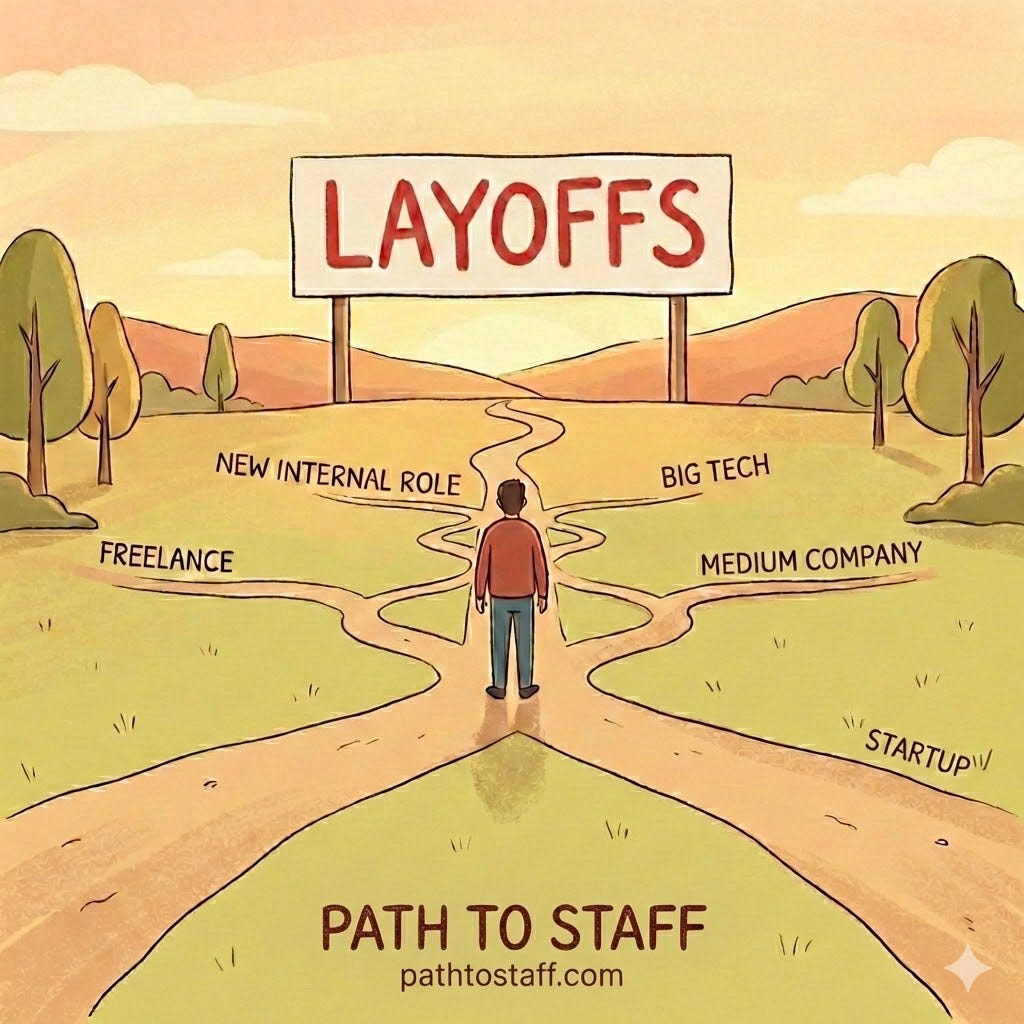
The First Time Is the Hardest
I still remember the first time I heard about layoffs at Meta. November 2022. I couldn’t sleep. I sat in my chair for hours, glued to my screen, refreshing internal channels and chats, wondering if I was next. I didn’t know what would happen next if I was laid off.
That feeling of helplessness was awful. I had spent years crafting my career, building great friendships, shipping projects, earning great performance ratings, and suddenly all of it felt like it was about to disappear.
The ground shifted under me and I realized how little control I actually had over my own fate.
I’ve been through several rounds of layoffs at Meta since then. It doesn’t get easier exactly, but I’ve learned how to handle it better.
Here’s what I wish someone had told me back in 2022. I hope by writing it all out, it helps you too.
If You Were Laid Off
Take a breath. I know this sounds silly. What do you mean “take a breath??”. There’s genuinely nothing you can do in the first few hours except try to distance yourself from your computer. Go for a walk. Call a friend. Don’t make any major decisions or statements.
Understand that strong performers get laid off too. Layoffs are usually about org structure, headcount targets, and business priorities. I’ve seen so many engineers who receive “greatly exceeds” on their perf review and still get laid off. This is not the time to doubt yourself.
Reach out to your network immediately. The people you’ve worked with within the company are your best asset right now. Let them know what happened. Don’t be shy about asking for help. Personally, I’d reach out to senior folks to see if their teams are hiring. If not, ask if they can vouch for your work if you need a testimonial. You’d be surprised, but most people want to help.
Moving Teams Internally
At many Big Tech companies, you have a short window of a month or two to find another internal role before you’re officially out. Use this time wisely.
Some tips on how to move internally:
Look for growth: You want to join a team that’s rapidly growing, not one that’s shrinking or stagnant. Look at the history of ICs on the team. Have they stayed and grown internally? Has the team’s size grown over the years? Has their product expanded in scope? All of these are positive signs to look out for.
Share your history: Given that you are moving internally, you have a leg up over external candidates. Make sure to share as many of your documents / past work, and leverage teammates whom you’ve worked with (remember the above tip?) to provide testimonials for you.
Move quickly. You’re competing with a tough external market and with other internal folks whose roles were also eliminated. The best internal openings will fill fast. I suggest closing on the new team within a week.
I recently guided several folks who were laid off this week. They were strong candidates who were able to land new internal roles within 2-3 days. The key difference that I noticed between them and prior teammates who were laid off was similar to how they succeeded with their projects: ownership, communication, influence and agility.
If Internal Options Don’t Work Out
If you can’t move internally, do this:
Save everything you can, right now. Before your access gets cut, save any performance feedback, peer reviews, or written comments about your work. Jot down your top projects and the impact they had. You’ll need this material for your resume and for future interviews, and once you lose access, it’s gone.
Start looking externally. Update your resume. Reach out to recruiters. Tap your network. The job market is rough right now, but opportunities do exist, especially if you’ve built a reputation and have people willing to refer you. (Remember to leverage your recent colleagues as well.)
Take time off if you can afford it. Layoffs are exhausting both emotionally and mentally. If your savings (and hopefully severance) allow for it, give yourself a week or two to reset before diving into the job search. Trust me: you’ll interview much better when you’re not running on fumes.
If You Weren’t Laid Off
Now, on the flip side, surviving a layoff round isn’t easy either.. You might feel relief, guilt, anxiety, or all three at once.
I’ve been in this position five times at Meta now. The good news is that it gets easier with time. The bad news is that it still hurts each time to lose colleagues you’ve worked with closely. People you’ve shipped projects with, grabbed lunch with, vented to after hard meetings. One day you’re chatting with them, the next day they’re gone. Yesterday you were writing performance reviews for them, the next day they’ve been let go.
What’s helped me is learning to separate the company’s decisions from my own sense of stability. Layoffs are a business decision made by people far above your pay grade. You can’t control them, but you can control how you respond.
Here’s my best tips on how to navigate this difficult period:
Find out what happened. Try to understand how the layoffs were decided. Was it performance-based? Was it by team or org? Was it seemingly random? Knowing the pattern helps you understand your own risk and plan accordingly. Every company handles this differently, but if you plan on staying, you need to ensure you’re not next on the chopping block.
Help those who were affected. Reach out to former teammates who were laid off. Offer to be a reference. Make introductions if you can. Forward their resumes to hiring managers you know. Those you help will remember you helped them through dark times.
Assume you’re not safe. If your company did layoffs once, they can do them again. Don’t get complacent; keep your resume updated. Keep your network warm. Keep track of your accomplishments and impact so you’re not scrambling to remember them later.
Start building a presence outside your company. After I started writing this newsletter, I got five times more inbound interest from recruiters and other companies. You don’t have to start a blog, but find ways to make your work visible. For instance, speak at a meetup. Contribute to open source. Post on social media about something you learned, or a new project you’ve been working on. Building an online presence will pay great dividends.
TLDR
Layoffs are brutal, but you can get through them, especially if you were impacted. Layoffs might feel like the end of something, but it can also be the start of something better.
If you were laid off:
Take a deep breath.
Reach out to your network immediately.
If internal mobility exists, move fast; the best roles fill quickly.
Save your performance feedback and project history before you lose access.
Update your resume and start looking externally if internal options dry up.
If you weren’t laid off:
Understand how the layoffs were decided so you can recognize future patterns.
Help former teammates with references and introductions.
Keep your resume updated.
Build visibility outside your company.
If you’re going through this right now, know that you’re not alone. Folks that I’ve worked with closely at Meta in the Metaverse org, know that I’m thinking of you.
You will get through it. Reach out if I can help.


